


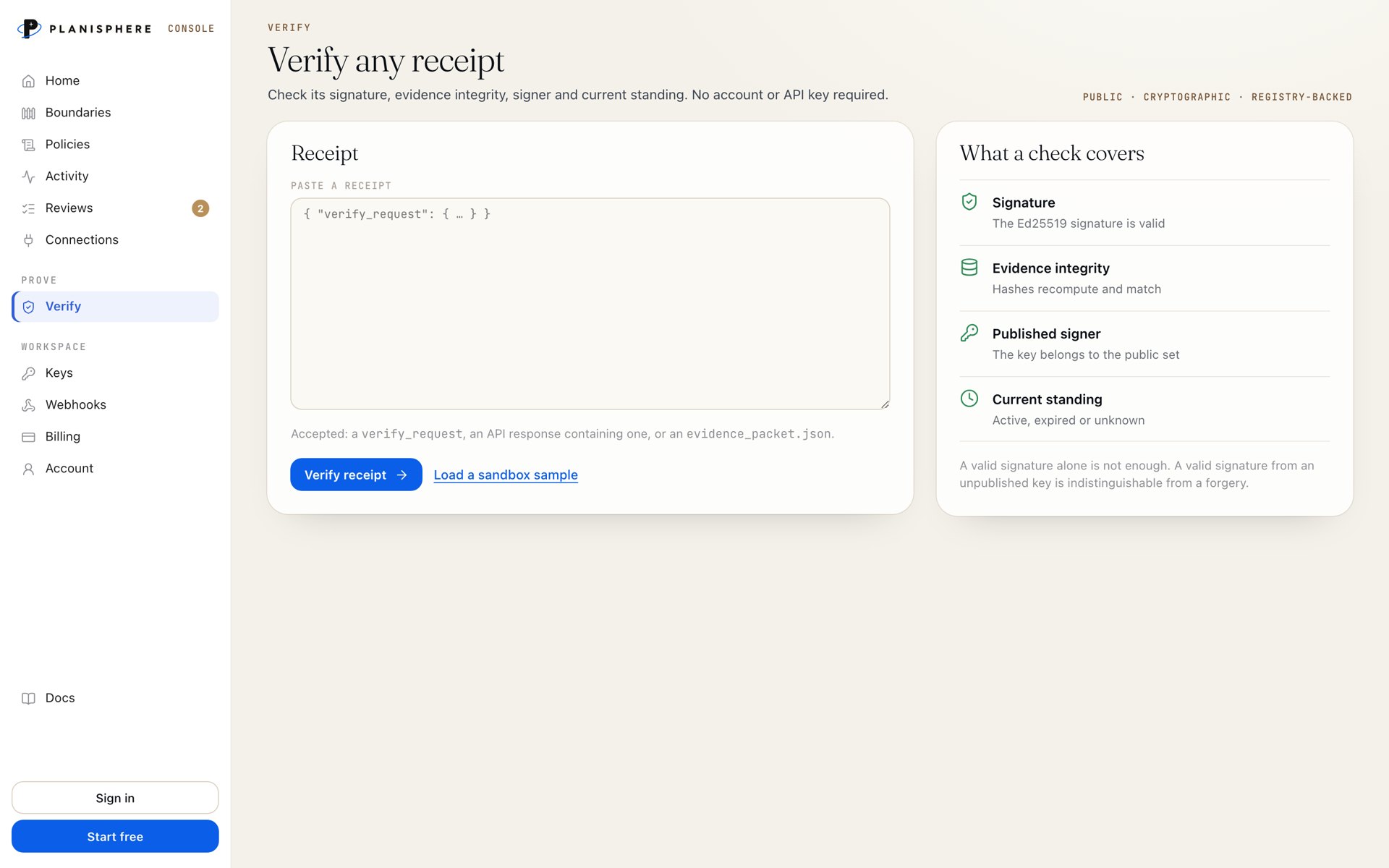
What verifying establishes
Integrity, not a verdict.
A receipt answers narrow questions well. It doesn't answer the broad ones for you, and it says so.
It establishes
The bytes match what was sealed. A changed file fails its check.
The signature checks against the signer's published key.
Current standing: active, expired or unknown.
It doesn't establish
A matching root doesn't show that every relevant event was included.
A sealed control result isn't a finding that the controls were sufficient.
A record can support an evidence process. It isn't a legal finding or a certification.
A public example
An AI audit trail, field by field.
A synthetic vendor-risk review, dated June 12, 2026: nine evidence files tied to their hashes and a signed root. Download it and repeat every check yourself.
event_id wf-2026-06-12-001
workflow vendor-risk-review
The ID connects the steps. It doesn't prove who performed them.
verdict all_required_controls_passed
The recorded control result, not proof the controls were enough.
issued_at 2026-06-12T12:00:00.000Z
Declared timestamps. No independent time authority here.
service_version 0.4.0
The producer version, not a policy or model revision.
artifacts[].sha256
34c75e1c…36607248
Recompute SHA-256 over the downloaded bytes, unformatted.
root_scheme merkle-rfc6962-sha256
A matching root doesn't show every event was included.
algorithm ed25519
key_origin synthetic-demo
This demo key isn't a trusted production signer.
synthetic-input-packet-sha
Illustrative labels, not verifiable payload hashes.
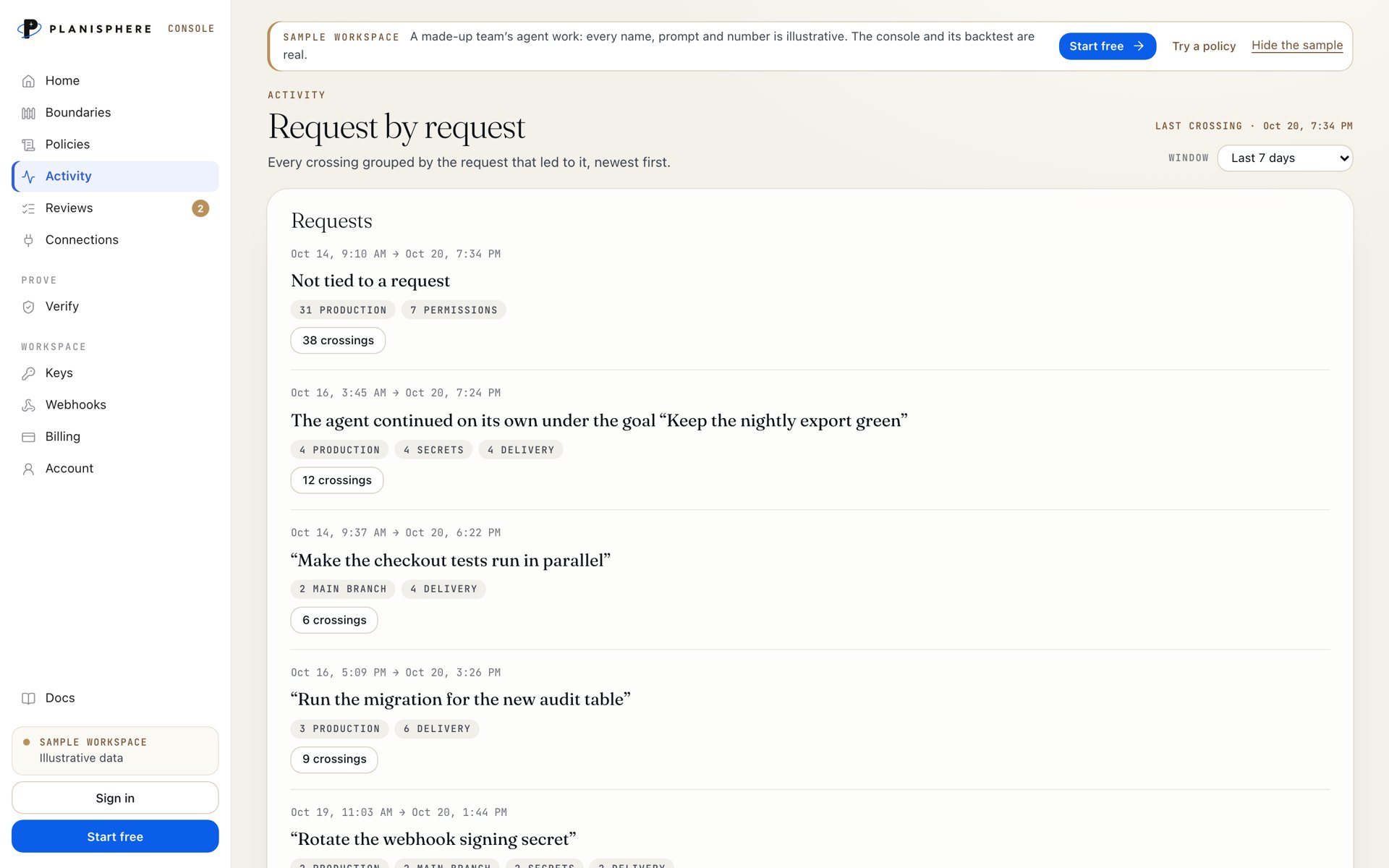
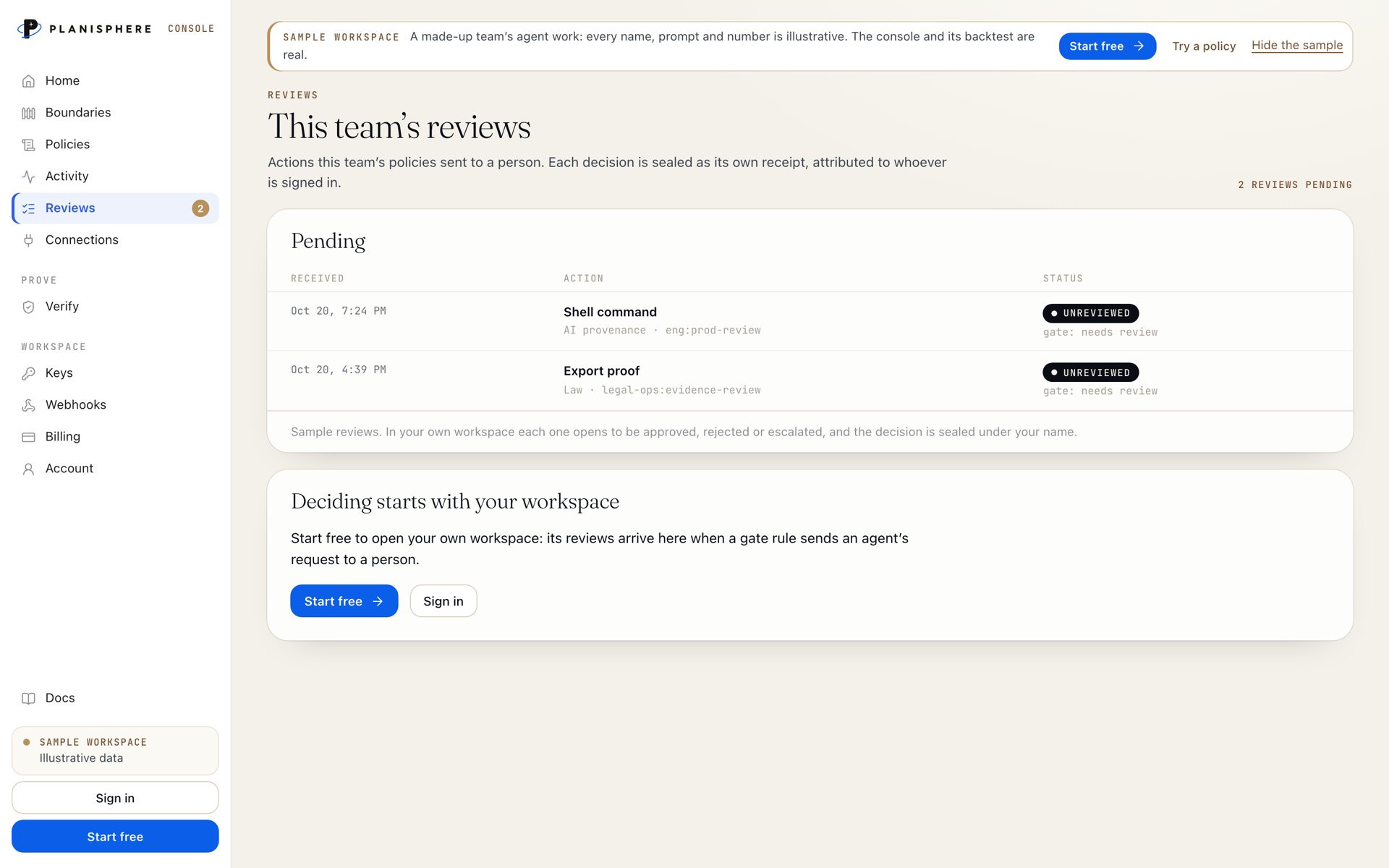
Reviews · sample workspace, illustrative data
Human sign-off
Decisions are receipts too.
When a rule sends an agent's request to a person, the decision is sealed as its own receipt, attributed to whoever was signed in. Approve, reject or escalate; each one can be checked later like any other record.